
High Temperature / High Pressure (HTHP) and geothermal wells don’t just run hotter than a typical oil and gas well. The failure mechanisms operators face downhole are fundamentally different, and tooling that performs reliably in conventional applications can fail fast once it’s exposed to HTHP conditions.
For operators planning a geothermal or HTHP well, understanding those failure mechanisms before spud is where the real cost control happens. A tool selection mistake made at the planning stage doesn’t usually show up as a line-item cost. It shows up weeks later as a stuck pipe event, a failed seal, or a workover that could have been avoided. Below is a breakdown of what changes downhole in HTHP and geothermal environments, why conventional tooling struggles to keep up, and how tool selection needs to change to match.
What Makes HTHP and Geothermal Wells Different
Four conditions combine in HTHP and geothermal environments that conventional tooling isn’t built around. Any one of them on its own is manageable. Together, they compress the margin for error considerably.
Extreme temperatures. Bottomhole temperatures in HTHP and geothermal wells routinely exceed what standard oilfield equipment is rated for over sustained exposure. Elastomers, seals, and electronic components that hold up fine in a conventional well can degrade quickly once they’re exposed to sustained heat, not just a brief pressure spike. Material selection in these wells has to account for how a component behaves after hours or days of continuous thermal exposure, not just its rating on a spec sheet under lab conditions.
Aggressive brine chemistry. Geothermal brines in particular carry dissolved minerals, salts, and gases that behave very differently once temperature and pressure conditions shift as fluid moves through the wellbore. That chemistry drives accelerated corrosion on standard-grade metallurgy, and it can degrade seal materials that would otherwise be considered fit for purpose in a conventional application.
Silica and calcite scale. As geothermal brine cools or depressurizes on its way up the wellbore, dissolved silica and calcite precipitate out of solution and deposit on casing, tubulars, and completion equipment. This isn’t a cosmetic issue. Scale buildup restricts flow area, interferes with the operation of downhole tools, and can turn what should be a routine workover into a full remedial intervention.
Hard rock formations. Geothermal wells are frequently drilled through crystalline, volcanic, or other hard rock formations that are considerably more abrasive and mechanically demanding than the sedimentary formations most conventional drilling strings are optimized for. That added hardness increases torque and drag on the string, accelerates wear on cutting structures, and raises the risk of a stuck pipe event.
None of these four conditions is unique to HTHP or geothermal wells on its own. What’s different is that they typically show up together, and they compound each other. Scale buildup in a well already running hot and corrosive puts more strain on equipment than either condition would on its own.
Where Standard Tooling Falls Short
The combination above means failure doesn’t show up the way it typically does in conventional oil and gas. In a standard well, a seal is usually rated to outlast the completion. In an HTHP or geothermal well, that same seal, if it isn’t specifically rated for sustained heat and aggressive chemistry, can degrade well ahead of schedule and fail without much warning.
Scale that would be a minor housekeeping issue in a conventional well can seize moving parts, block flow, and make it difficult to run tools to depth at all. Casing that would tolerate normal loading in a conventional application can collapse under the combined thermal and mechanical stress found in geothermal wells. And a drilling string that would drill through sedimentary rock without incident can get stuck in hard rock formations if the string isn’t equipped to manage the added torque and drag.
None of this is an argument for over-engineering every component on every well. Not every part of a geothermal or HTHP completion needs to be built to the same extreme spec. It’s an argument for being deliberate about which components genuinely need to be rated differently for the specific conditions of the well, and which ones don’t, so budget and lead time go where they actually matter.
Tooling Built for HTHP and Geothermal Conditions
Tasman’s team works across HTHP and geothermal applications on a regular basis. The equipment we bring to these wells is selected specifically for the conditions described above, not adapted after the fact from a conventional oil and gas catalogue.
High-temperature seals and materials. Rated for aggressive downhole chemistry and corrosion in environments where conventional seal materials can’t hold up over the life of the well. Getting this right at the outset avoids the far more expensive scenario of pulling a string early because a seal failed ahead of schedule.
Milling and fishing tools for scale and remedial work. Taper mills, junk mills, spears, grapples, casing swages, rollers, and broaches suited to scale removal, collapsed casing, and remedial wellbore intervention. These tools exist because scale and casing damage in HTHP and geothermal wells aren’t edge cases. They’re a recurring part of well maintenance, and having the right fishing and milling tools on hand shortens the time a well is offline.
Drilling jars, accelerators, and friction reduction tools. Purpose-selected to keep the string moving through hard rock formations, reducing the risk that a stuck pipe event turns into a full fishing job. Mechanical vibration mitigation plays a similar role, reducing the wear that hard rock and high torque conditions put on the string over the course of a run.
Plan Tool Selection Before the Well Starts
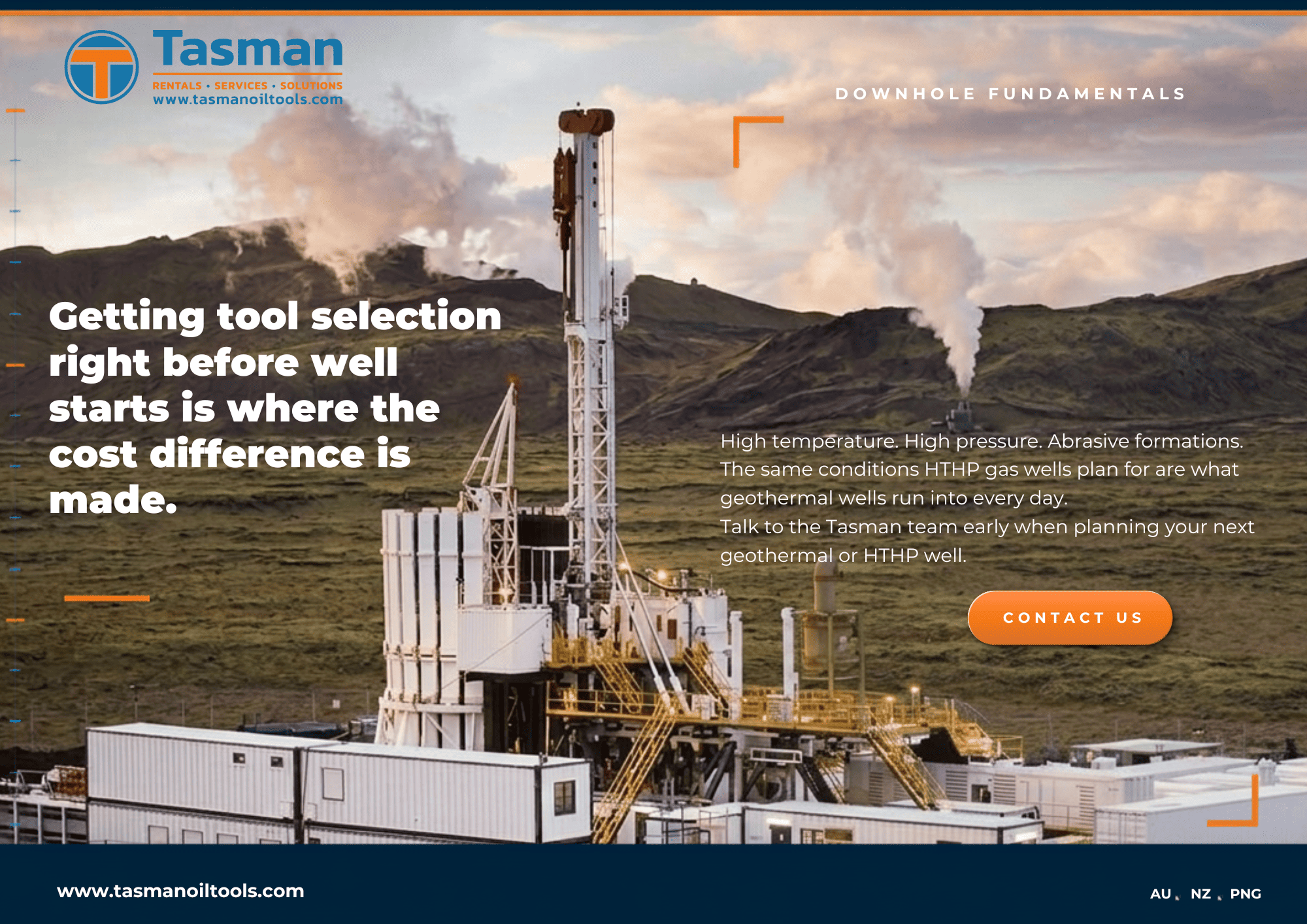
In HTHP and geothermal work, the cost difference isn’t made during the intervention. It’s made in the planning stage, before the string goes downhole, when tool selection is matched to the specific chemistry, temperature, and formation conditions of the well. Waiting until a problem shows up downhole to source the right fishing or milling tools almost always costs more in downtime than planning for it up front.
Talk to the Tasman team early when planning your next geothermal or HTHP well.
Frequently Asked Questions
What is an HTHP well?What is an HTHP well?
HTHP stands for High Temperature / High Pressure. It refers to wells where bottomhole conditions exceed the temperature and pressure thresholds that standard oilfield equipment is typically rated for on a sustained basis. What counts as HTHP can vary by operator and region, but the practical impact is the same: equipment needs to be rated for sustained exposure to extreme conditions, not just peak values.
Why does geothermal well equipment need to be different from conventional oil and gas tooling?
Geothermal wells combine extreme sustained temperatures, aggressive and mineral-rich brine chemistry, silica and calcite scaling, and often hard, abrasive rock formations. Conventional oil and gas tooling is generally optimized for sedimentary formations and less aggressive downhole chemistry, so equipment that performs well in a standard well can degrade or fail faster once it’s exposed to geothermal conditions.
What causes scale buildup in geothermal wells?
Scale forms when dissolved minerals, primarily silica and calcite, precipitate out of geothermal brine as it cools or depressurizes moving up the wellbore. Once precipitated, scale deposits on casing, tubulars, and completion equipment, where it can restrict flow, interfere with downhole tool operation, and complicate future interventions if it isn’t managed.
What tools are used for scale removal and remedial work in HTHP and geothermal wells?
Common tools include taper mills and junk mills for cutting through scale and debris, spears and grapples for fishing operations, and casing swages, rollers, and broaches for reshaping or clearing damaged or scaled casing. The specific tool selection depends on the type and severity of the scale or damage encountered.
How do drilling jars and accelerators help in hard rock geothermal formations?
Drilling jars and accelerators are designed to deliver a mechanical impact that helps free a string that has become stuck or is experiencing excessive drag, which is more common in hard, abrasive geothermal formations than in typical sedimentary drilling. Used proactively alongside friction reduction tools and vibration mitigation, they help keep the string moving before drag or sticking escalates into a full stuck pipe event.
When should tool selection be planned for an HTHP or geothermal well?When should tool selection be planned for an HTHP or geothermal well?
Tool selection should be planned before the well is spudded, based on the specific temperature, brine chemistry, and formation conditions expected. Sourcing specialized fishing or milling tools after a problem has already occurred downhole typically costs significantly more in downtime than planning ahead with a tooling partner familiar with HTHP and geothermal conditions.
Have a specific HTHP or geothermal well coming up? Contact the Tasman Oil Tools team to talk through tool selection before you spud.