
Fishing Tools Services
Fishing Tools for Integrated Recovery, Remediation & Well Integrity Operations
Tasman supplies fishing tools as part of an engineered fishing, well intervention, integrity, and plug and abandonment (P&A) solution — not as standalone rental equipment.
Successful fishing operations depend on correct engagement method, effective fish preparation, controlled force application, debris management, and integration with pressure control, fluid handling, and surface systems. Tasman’s engineering-led approach ensures each fishing assembly is deployed within the context of the broader well objective, reducing non-productive time (NPT) and operational risk.
Many fishing operations originate from drilling-related events such as stuck pipe, tool failure, mechanical damage, or pack-off conditions, reinforcing the need for continuity between drilling, intervention, and well integrity workflows.
Tasman supports fishing operations across oil & gas, geothermal, and mining sectors throughout Australia, New Zealand, and Papua New Guinea.
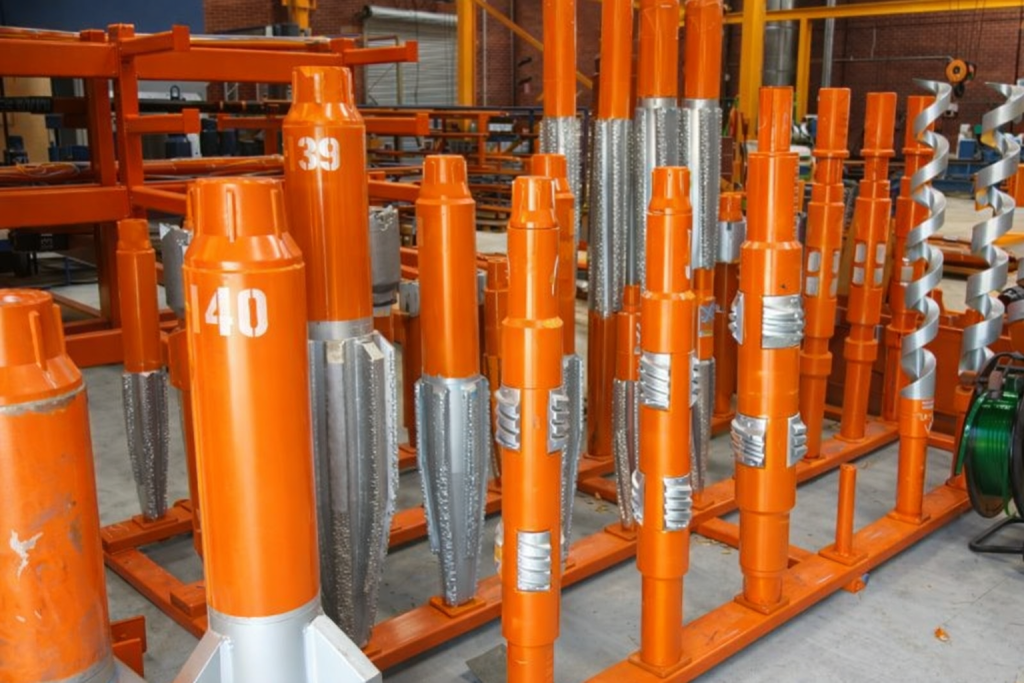
Typical Applications & Use Cases
Fishing tools are deployed across a wide range of drilling, workover, intervention, and abandonment operations where access to the wellbore has been compromised or equipment has failed. These operations often evolve rapidly, requiring flexible tooling, contingency planning, and fast decision-making to minimise downtime.
Core Drilling Rental Tools
- Stuck pipe and stuck BHA recovery
- Tool failure and lost equipment retrieval
- Workover and well intervention operations
- Casing and completion remediation
- Packer milling and recovery
- Slot recovery and sidetracking
- Plug and abandonment (P&A) programs
These activities commonly precede or follow thru-tubing intervention or isolation operations, reinforcing the importance of integrated planning across downhole tools, workstrings, pressure control, and fluid systems. Early engineering involvement improves recovery success and reduces escalation risk.
Products & Services
External catch tools are typically the preferred fishing method when the fish can be accessed and prepared from the outside diameter. They generally allow higher overpull and better load transfer while maintaining internal access to the fish for contingency operations.
External catch tools are commonly run with jars, accelerators, and stroking tools to apply controlled axial force and free stuck tubulars under load.
- Overshots – engage and recover fish by gripping the outside diameter
- Spiral Grapples – high-strength external engagement and load transfer
- Control Grapples – controlled engagement and release
- Basket Grapples – recovery of irregular or damaged fish tops
- Die Collars – external gripping with minimal fish-top preparation
- Kelo Oversockets – engagement on damaged or out-of-round fish necks
- T-Dog Overshots – aggressive engagement on worn or tapered fish
Correct selection of the external catch system is critical to avoid secondary failures or fish damage. Tasman engineers these assemblies to suit the fish condition, load requirements, and available workstring.
Internal catch tools are deployed when external engagement is not possible due to collapsed, damaged, or inaccessible fish outside diameters. These tools rely on precise internal sizing and controlled engagement to recover the fish without further deformation.
Internal fishing is often preceded by milling or dressing operations to prepare the fish for engagement and reduce the risk of slippage or wall failure.
- Internal Spears – engage fish internally using slips or dogs
- Bulldog Spears – aggressive internal engagement on thin-wall tubulars
- Taper Taps – cut threads into the fish ID to enable recovery
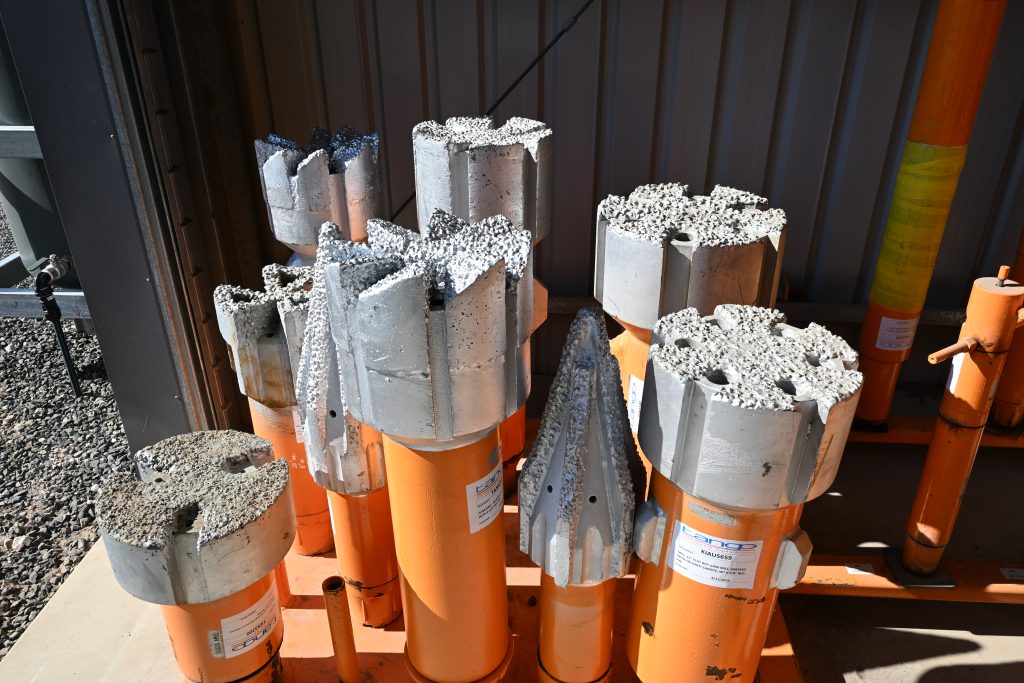
Milling tools are used when the fish or wellbore cannot be immediately engaged due to deformation, collapse, cement, or debris. Milling restores access and prepares the wellbore for fishing, isolation, or remediation operations.
These operations are common during packer recovery, casing remediation, slot recovery, sidetracking, and P&A programs.
- String Mills – dress casing windows and polish restrictions
- Junk Mills – remove metal debris and irregular obstructions
- Taper Mills – dress liner tops, packer tops, and fish profiles
- Pilot Mills – guide controlled milling assemblies
- Skirted Mills – evenly dress fish tops
- Section Mills – remove casing sections for remediation or abandonment
Jarring tools are used to free stuck tools and tubulars by applying controlled axial force in open or cased hole environments. Their effectiveness depends on correct placement, workstring selection, and energy transfer efficiency.
- Fishing & Drilling Jars – controlled up or down impact
- Accelerators – increase impulse and improve energy transfer
- Surface Jars – effective for shallow sticking events
- Bumper Subs – controlled stroking and release
- Spang / Tubular Jars – jarring in restricted ID environments

Talk to Tasman Early
Fishing tools delivered as part of a fully engineered recovery, remediation, or abandonment strategy — not standalone rentals.
Talk to a Tasman engineer about our Fishing Tools and integrated well intervention services.